
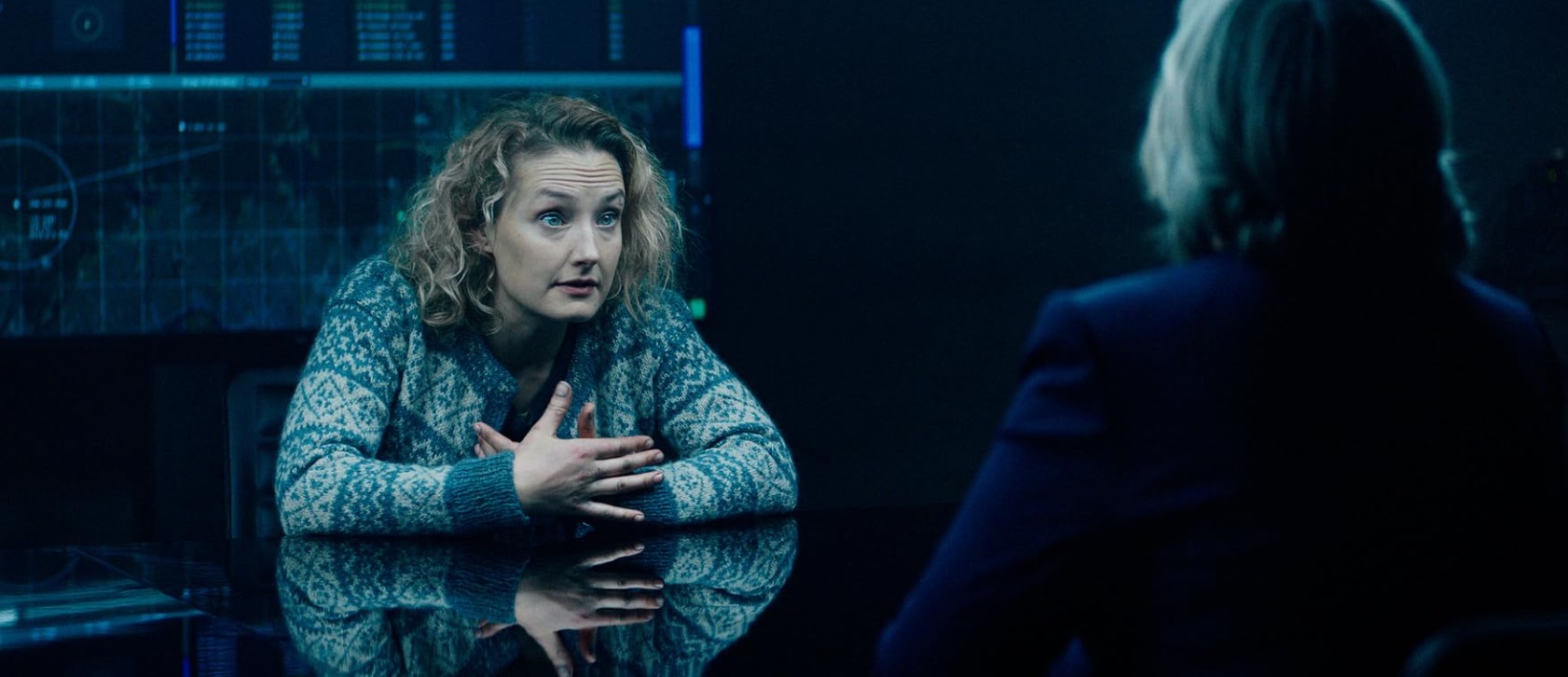
One day in the mountains of the Dovre Municipality, where a drilling operation is underway; the workers use explosives to clear a passage, but afterwards, the tunnel continues to crumble and fall, and all that’s left is a big hole in the mountain, and some strange marks moving away from it. The Norwegian Government calls in a paleontologist to investigate, but few belive her when she suggests the marks leaving the hole, look like feet. Further unexplained forms of destruction take place, until the truth is revealed, a truth that no-one wants to believe, despite what they see with their own eyes!
Released in 2022, and directed by Roar Uthaug; Troll is an epic monster movie from Norway, in which a giant ancient Troll re-awakens, and makes its way to Oslo. The film stars Ine Marie Wilmann, Kim Falck, and Mads Sjøgård Pettersen, with Gard B. Eidsvold, Karoline Viktoria Sletteng Garvang, Fridtjov Såheim, Dennis Storhøi, Bjarne Hjelde, and Anneke von der Lippe in supporting roles. Not to be confuesd with the 2010 film Troll Hunter; which was also a Norwegian movie with some giant troll monsters in, but where-as Troll Hunter was more a found footage mockumentary; Troll is more like a classic giant monster movie.
One thing that stands out quite prominently with Troll, is the constant referencing to the myths and legends of Norwegian folklore. This is quite surprising on a small level , given the number of monster movies produced to date, which relied much more heavily on science fiction to explain the creature, than myths or legends. Troll isn’t the first film to take this approach however. There has been several monster movies in the past which rely on this approach to storytelling.
Some of these include classic films can include Warlords of Atlantis, which is heavily set in the lost city of Atlantis, and whose discovery by the characters comes down to myths and legends, like disturbing a giant Octopus‘s alarm clock. Then there are more modern pieces, like Gamera: Guardian of the Universe, which highlights that while the creatures in it were created through science, this took place thousands of years previously, and their re-awakening was told through the legends of their creators’ civilization.
Even some Godzilla films have taken this approach on occassion. Three of the monsters in Godzilla, Mothra and King Ghidorah: Giant Monsters All-Out Attack (or GMK for short) were referenced as being Guardian Monsters, and even had shrines dedicated to them. There was even a scene in the original 1954 Godzilla, in which a village elder talks about the legend of a creature called Godzilla.

There is nothing wrong with the mythical approach, it’s actually quite a nice change from the scientific norm, especially as the creature in Troll is designed to look like the trolls of Norwegian legends (large, balding, and a prominent nose). This also makes the film easy to follow too, whilst still allowing a revelation hidden in mystery.
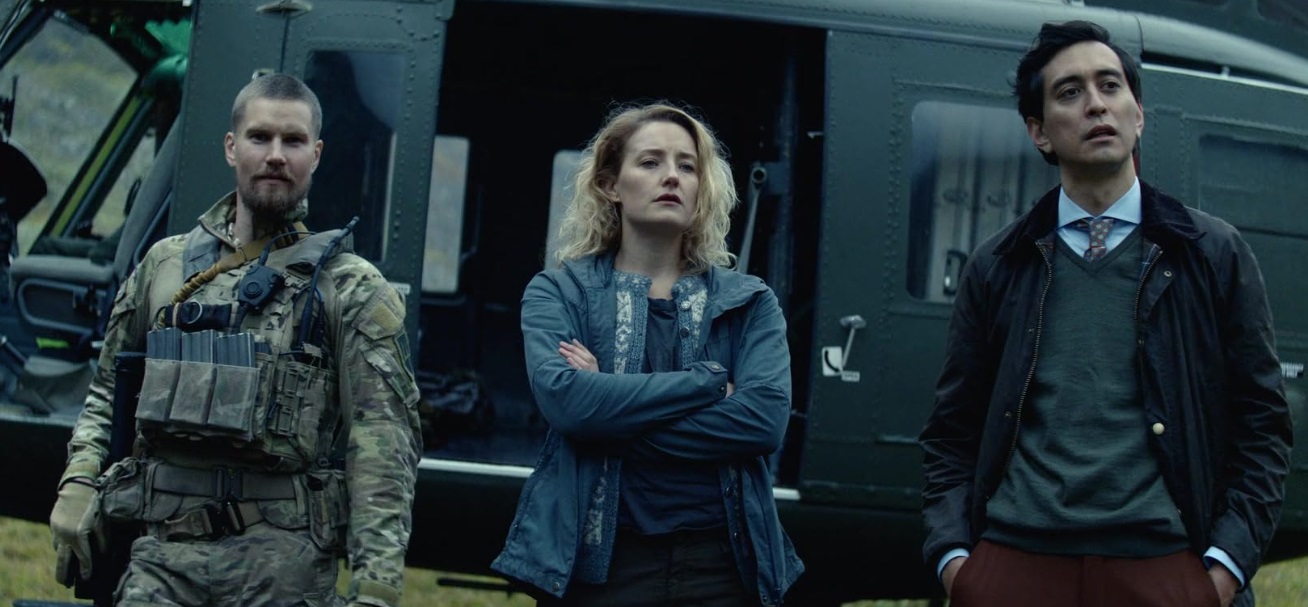
So, you have the core crew of a paleontologist, a political adviser, a military commander, and a mad like man who knows a lot about folklore. They go off on an adventure, to find out whats going on. They then find a giant troll, and try to find a way to stop it, whilst the government proves to be more ineffective than useful in a dire situation. But then, there’s a twist, highlighting the creature’s origin, and it’s motives, which helps the team get the win by defeating the mountain menace.
It’s a simple plot, and one that also allows room to make quirky and hidden references to other classic (ish) monster movies. The Troll’s motivations as to where and why it’s going where it’s going, is a lot like Mothra in the original Mothra film, who was seeking out it’s tiny twin fairies. The footprints in the mud, is a lot like the giant footprint scenes from the 1998 Godzilla. And then there’s the ending, which is a lot like King Kong (I prefer 1976, but it works with 1933, and 2005 as well), but not in the sense of military aircraft swatting at a large Gorilla on top of the Empire State Building (or the World Trade Center if you’re watching the 1976 version), more in how tragic it becomes.
The ending to Troll is pretty tragic, and this depth of tragedy is built up shortly before hand. The classic monster movie story, suggests that because the monster is different, and it’s smashing up a city, it therefore must be a bad thing. But would that really be the case? Surely there must be the allowance to think that perhaps the monster is doing that accidentally, as it doesn’t know where it is, or how to behave on a human level? In the case of this film, the monster is simply walking through things. It’s not smashing by will, it’s just going for a walk. It only really attacks when provoked, like self defence. Plus it can’t be inherantly evil, given that it saved the life of a child.
The Troll is more or less in the wrong place at the wrong time, and had shown it was capable of human understanding, from those who tried to protect it. And then, it discovers, that it’s the last of it’s kind (or is it, given that the sequel was released today on Netflix?), and feels the burden of loneliness. All it wanted to do, was go home, to see it’s family. Is that so wrong? And so when it dies at the end of the film, it feels more like a tragic loss, as it wasn’t a bad monster. It’s only real crime, was that humanity had built quite a few cities since it’s imprisonment, and so therefore didn’t know how grave the destruction it caused would or could be.

Troll is truly an epic monster movie. For a start the visual effects of the monster are Fantastic, it actually looks real, like it isn’t an effect at all, but a real actor (imagine?). But that’s just the start, as it contains an easy to follow, but still captivating story, features references to other classic monster movies, chooses a more unique direction in explanation, and even makes you feel for the monster, rather than seeing him as a possible enemy. It’s a film full of action and mystery, but subtley ends in a sad way!
 Things I Like
Leave a comment