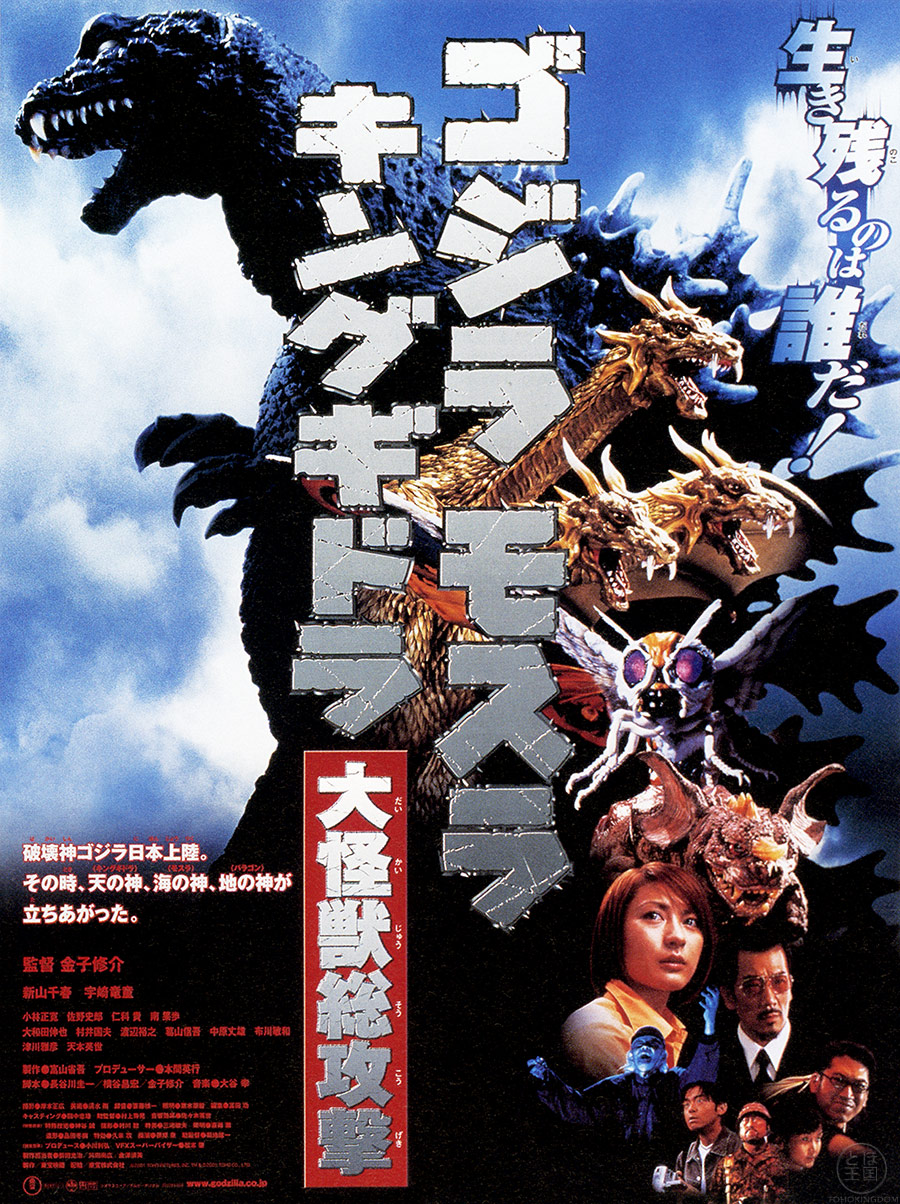
It has been 50 years since Godzilla attacked Tokyo, and Japan has rebuilt itself. But suddenly more monster sightings have been recorded. Firstly there was a creature attacking New York in 1998. Then a monster was spotted near a destroyed American nuclear submarine. Then another monster, and another, and another. Most worryingly of all, a name keeps being said aloud by all witnesses, a name which everyone has tried so hard to forget!
Released in 2001, and directed by Shûsuke Kaneko; Godzilla, Mothra and King Ghidorah: Giant Monsters All-Out Attack (frequently shortened to just GMK)is a giant monster movie, and the 26th film in the Godzilla series. The film stars Chiharu Niiyama, and Ryûdô Uzaki, with Masahiro Kobayashi, Hideyo Amamoto, Kaho Minami, Shirô Sano, and Hiroyuki Watanabe in supporting roles. The film also features what is quite possibly the longest movie title in the entire series (I am at this moment trying to think of any other with a longer title). Interestingly enough, the film’s director holds a rather fascinating record, one that to this day still hasn’t been broken. Shûsuke Kaneko is to date the only person to have directed both a Godzilla film, and a Gamera film. He is of course the director of the ever captivating, spellbinding, and enthralling: Gamera Heisei Trilogy!
OK, so of course we need to set the scene, the production scene that is. It is a widely known fact that nearly every Godzilla film released between 1999, and 2004 (or the Millennium era as it’s best known), all featured a bizarre choice of story telling. All but one film was a direct sequel to the original 1954 film. Now there’s not necessarily anything wrong with that, but it does mean that the events of the previous film…didn’t happen! So if you’re watching them in order, this happens:
- Godzilla 2000 (released in 1999): Direct sequel to 1954, all previous 23 films didn’t happen!
- Godzilla vs. Megaguirus: Direct sequel to 1954, all previous 24 films didn’t happen, so forget ever seeing the giant UFO!
- Godzilla, Mothra and King Ghidorah: Giant Monsters All-Out Attack: Direct sequel to 1954, 24 previous films didn’t happen (although 1998 was comically referenced), so forget ever seeing the giant insect!
- Godzilla Against Mechagodzilla: Direct sequel to 1954, all previous 25 films didn’t happen, so forget ever seeing King Ghidorah being the good guy!
- Godzilla: Tokyo S.O.S: Direct sequel, to the previous film. Everything in previous film happened, no need to forget anything!
- Godzilla: Final Wars: Not even a direct sequel to 1954, but other monster movies are sort of referenced. But do remember to forget about the Robotic Godzilla, and tragically; that post credit scene!
This decision to constantly forget the previous films and just talk about 1954 does mean there’s basically no continuity, despite the track record of possibilities each film has provided, but not acted upon. And whilst a blank slate for each director allows them more freedom to do what they want, again, it sort of makes the previous film a complete waste of time.
But, in the case of Shusuke Kaneko, he takes the opportunity to put his own spin on Godzilla, and serves up what is quite easily, one of the best films in the entire series!
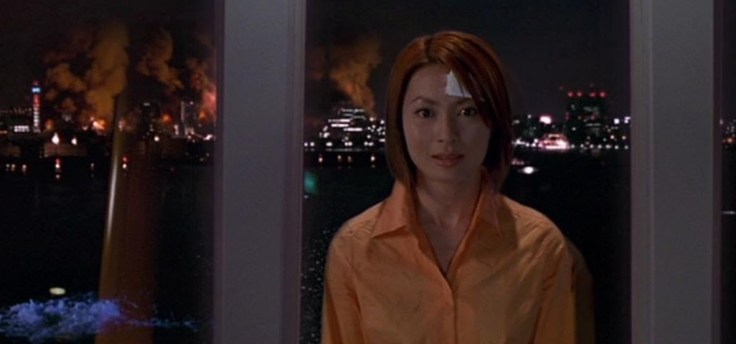
To say there are similarities between this and the Gamera Heisei Trilogy would be something of an understatement. From a production standpoint it features both the same director, and the same composer (Kow Otani). The film features focuses heavily on a strong female lead, and whilst it is still a science fiction film, like Gamera it features a lot of fantasy folklore and mythology.
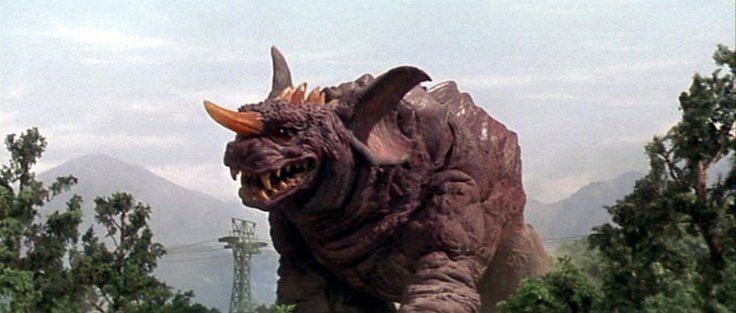
Originally Kaneko wanted to feature three similar monsters as Guardian Monsters. Those three being Varan, Anguirus, and Baragon; but he was told to replace Varan and Anguirus, with Mothra and King Ghidorah. So good news for Baragon, returning to the series after a 33 year absence (although why his name is not in the title (making it even longer) is anyone’s guess), but sad news for Varan who has not been seen since 1968. But if the idea was to include two other monsters of greater popularity, why keep Baragon over series staple Anguirus? Or, why not get rid of Baragon, and include Rodan, at least then you would have three guardians with one standout ability/form; that being they can all fly?
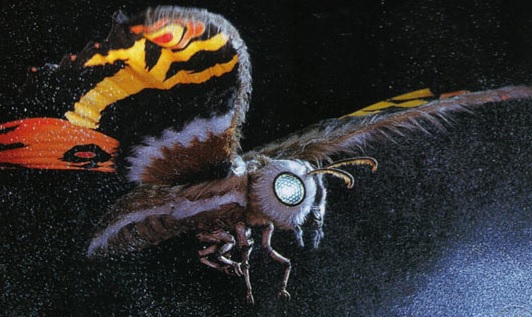
So anyway, we have two substitute guardian monsters, and one kept in from the original team. This is a pretty simple idea, but now it needs introducing into the modern world. And to do this, the film decides to involve something which from first viewing may seem subtle or even largely forgettable, but one that when you delve deep into it, is rather morbid and haunting. It’s this idea that the world has moved on from the horrific events of the Pacific War and those who died in it. But the spirits of those who died, don’t want the world to forget what happened, so they cause Godzilla’s return in a way to lash out on the modern world. To this end then an elderly man sees there is only one way to defeat the approaching threat, that of awakening the three guardian monsters to defend Japan. It’s a really haunting idea, and one that allows the narrative to progress, but sadly isn’t really explored in-depth, which also makes it largely forgettable as the film carries on.
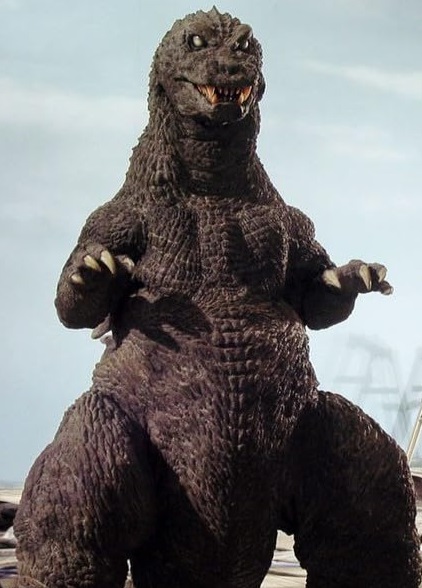
But, Godzilla is now on his way with a viable reason as to why he has not been seen in (technically 47) 50 years. The approach not to even connect to any previous film other than the original here, also carries several benefits to Godzilla’s characterization. Firstly he is much smaller. His height has been drastically reduced. The benefit? Well smaller giant monsters can be a greater peril to humans, as instead of looking like Ants, they could look like viable snacks (just like The Host). In addition to that his appearance is a real one-of-a-kind appearance. His sabre like teeth are for more menacing than his usual gnashers, and his almost soulless like white eyes make him look like a ghostly spirit, no humanity, just pure rage! And then of course, his now even deadlier atomic death-ray!
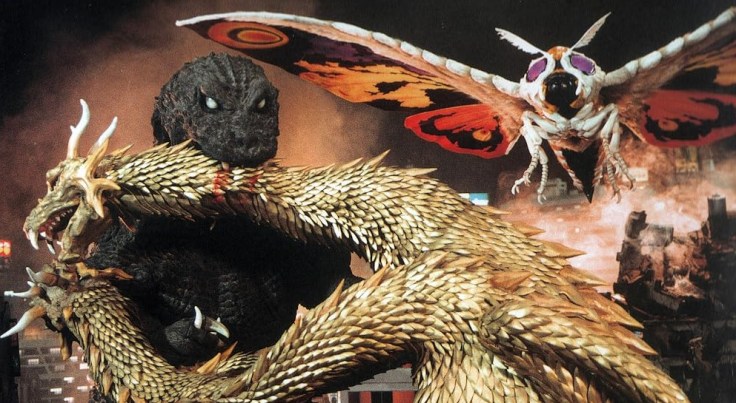
Godzilla isn’t the only monster here of course, we have three others to enjoy. Baragon for instance makes a rather glorious return to the series, and features heavily in one of the film’s best (if not the best) fights. We then get Mothra, who sadly is rather relegated for a superstar, not appearing for quite a bit of the film, and then losing quite quickly. But the big surprise is that King Ghidorah is now playing goody. After years of trying to destroy the world only to be stopped consistently by Godzilla, he now decides to turn from his life of harming others, to saving others, by ironically fighting Godzilla…again…this is just weird.
The fight scenes are nice and brutal, and even feature that rarely seen commodity in a Godzilla movie: Blood. It heightens the sheer brutality of it all. Even more brutal considering that the supposed guardian monsters, are also rather weak. I get building them up over time, but Godzilla slaughters them all quite easily. It does make you wonder whether Kaneko was trying to make a point to Toho by secretly saying ‘you should have let me keep Varan and Anguirus’.
The soundtrack is nicely action packed to with elements of fantasy for good measure. But it is hard to hear them all, and really see the differences between tracks, given that about half of the film’s score, does seem to be different iterations of the same piece of music. It doesn’t matter which scene, it’s there, the same one. But I am not complaining, it’s a terrific piece of music, with a hint of Gamera.
Godzilla, Mothra and King Ghidorah: Giant Monsters All-Out Attack does have it’s weird decisions, all thanks in a big way to the choice of production and direction of the series at this point. But, instead of being saddled with issues, Shûsuke Kaneko takes the opportunity, and makes it count, by making something truly terrific. It contains returning monsters, as well as legendary ones too. It features great acting from it’s lead and supporters. It contains several whiffs of humour referencing other films, and whilst it uses a very limited score, it uses it to the best effect. It’s a weird one, but weird doesn’t necessarily mean bad, and in this case, it’s definitely good. In fact, it’s one of the best films in the entire series!
 Things I Like
Leave a comment