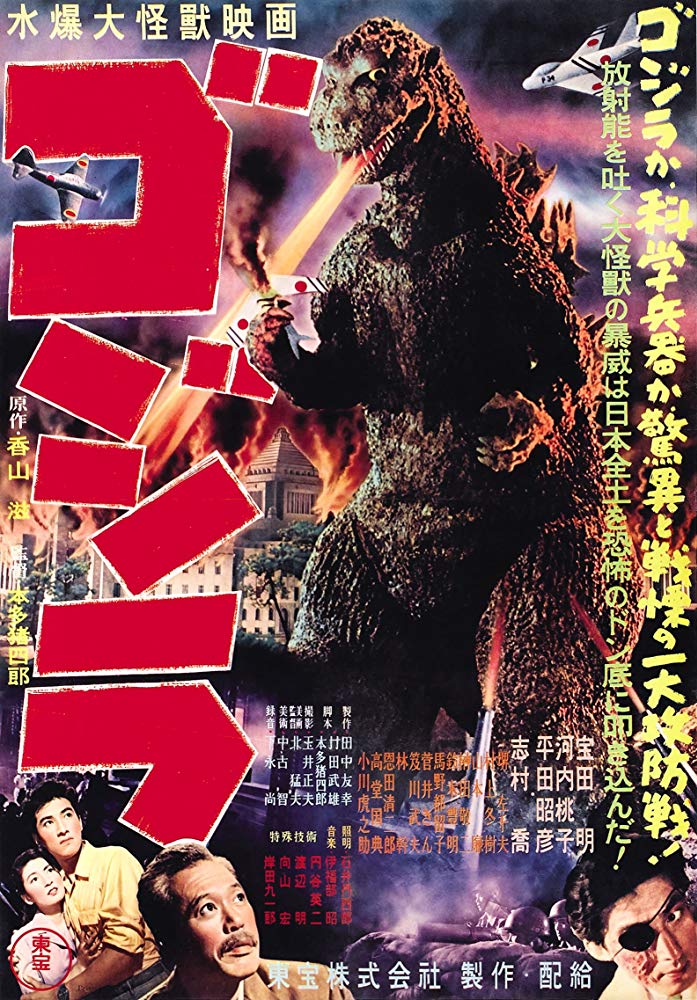
Several ships have been destroyed by an unknown force, with near to no survivors to explain why. The sole survivor washes ashore on Odo Island, where an elderly resident tells others about the legend of a monster, the islanders call: Godzilla!
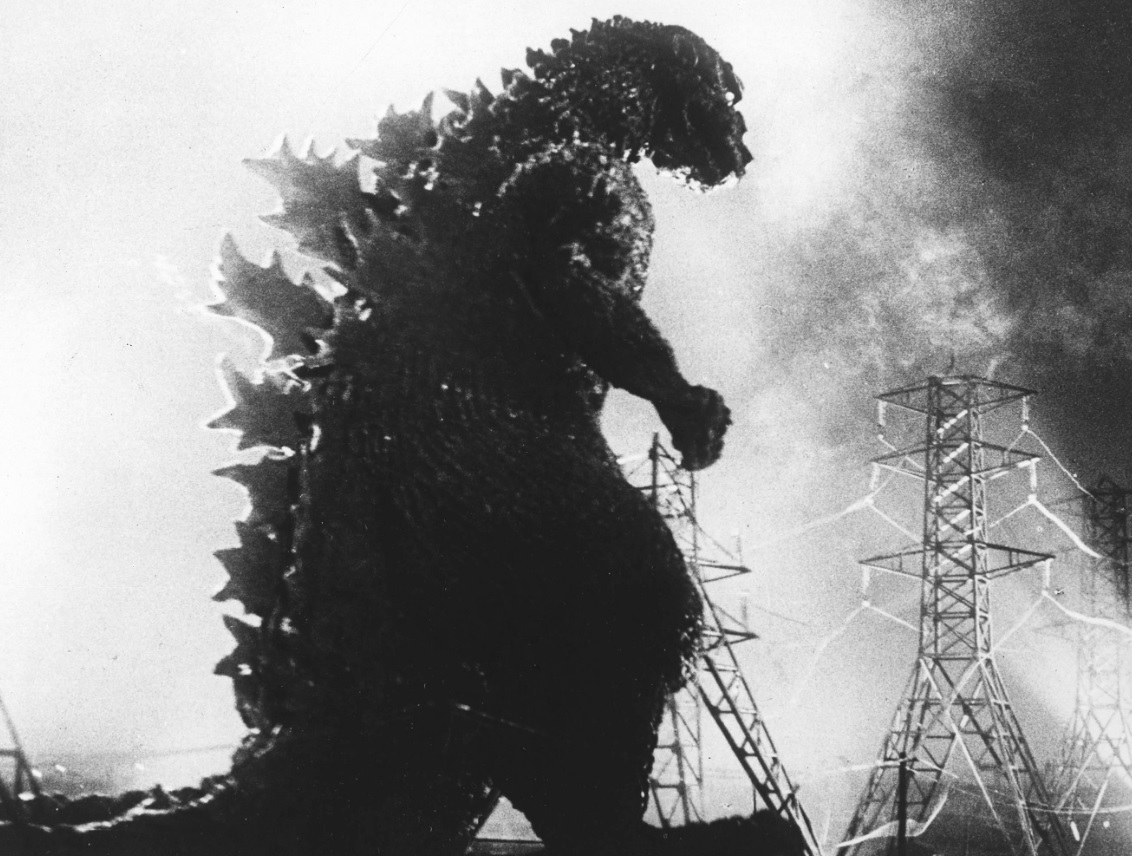
Released in 1954, and directed by Ishirô Honda; Godzilla is the first film in the Godzilla series of Japanese monster movies. The film stars Akira Takarada, Momoko Kôchi, Takashi Shimura, Akihiko Hirata, Sachio Sakai, Toyoaki Suzuki, and Kokuten Kôdô, with the role of Godzilla being played by both Haruo Nakajima, and Katsumi Tezuka. The film was produced and conceived by Tomoyuki Tanaka, who was inspired by the film The Beast from 20,000 Fathoms, and the Daigo Fukuryū Maru incident. The story was written by Shigeru Kayama, and featured pioneering special effects by Eiji Tsuburaya, whilst the film’s soundtrack (and Godzilla’s roar) was produced by Akira Ifukube.
The film was eventually released in America, and worldwide in 1956 (although heavily edited, and featuring additional footage with future Ironside star Raymond Burr), but under the title of Godzilla, King of the Monsters!
Coming across this post, you might be expecting me to discuss the many themes surrounding this film, and it’s titular monster. From how Godzilla symbolizes the destruction, and trauma felt by Japan; being the only country to date, to be attacked by a nuclear weapon. Or perhaps how Godzilla represents Mother Nature putting her foot down, and saying ‘NO!’ to the continued destruction, caused humanity’s desire to build and test nuclear weapons. Or maybe how Godzilla could be simply seen, as just an animal in the wrong place at the wrong time. Well, unfortunately I won’t be discussing any of that, because it’s already been done.

Books have literally been published on this film, and it’s themes. It’s an icon of cinema for a reason. New fans are continually discovering this film, and it’s following series’, and have been doing so for 70 years now. And many people have studied this film, and it’s impact over the years too. So discussing what has already been widely discussed, does feel like a waste of time. Especially so, as I want to talk about something else…

Have you noticed how the definition of the word “Monster”, seems to have changed? If you observe cinema over the last 20 years, Monster doesn’t seem to mean, what it used to mean. According to Oxford Languages, the word monster as a noun/verb means:

However, today, when describing a monster, we seem to have spun it off to mean something else. We often use it to describe the actions caused by a person, who does terrible things. Dictionary.com classifies it in relation to people, (amongst other things) as: “a person who provokes or elicits horror by wickedness, cruelty, etc.” Once upon a time, Monster was a defined term to describe things that weren’t human. From Vampires, to Werewolves, to Dinosaurs, and of course Godzilla. But to use that term now to describe these creatures, just seems out of place. It feels like the term Monster Movie, could mean something else entirely. And as a result, that could be why we need to have a more definitive answer to describe the genre as a whole. Although Godzilla has always been ahead of that curve in definition, as to aficionado’s, it’s actually a Kaiju movie.
So, if we were to take another look at this movie, but consider specific people as monsters, and not the giant monster itself; who then is the real monster of this monster movie? Well, there are a couple of suspects, but one is more (and rather unfairly) obvious.

Dr. Serizawa (Hirata) is a recluse scientist, who is largely unseen in the first hour of this movie. We see him early on, masking his eye patch, before seeing him again later on, revealing a secret to his ‘girlfriend’, which we don’t see; but it’s something that horrifies her. This could be many things, and if you compare this moment, to his appearance in the original trailer, you could be forgiven for thinking, that perhaps he created Godzilla (like Dr. Frankenstein and his monster). But of course, he didn’t, as is shown later on. What he has made is (Spoiler Alert, although the film is now officially 70 years old) a potential weapon of mass destruction. He has created a device called the: ‘Oxygen Destroyer‘. A device which removes all the air out of the water in a given area.
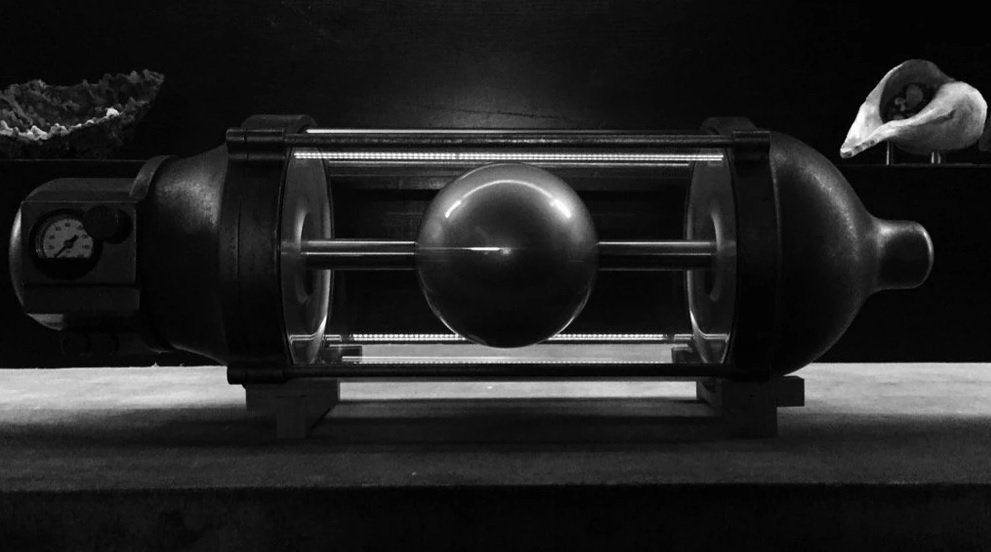
The mad scientist has created a weapon of mass destruction, much in the same way the Manhattan Project achieved less than a decade earlier. Does that make Dr. Serizawa a monster? No, not really. The character does not hide the fact that he discovered it by accident, and wishes that he never had. He’s so ashamed of his discovery, he hides it away, and has made it his new life’s work, to make sure it will never be used again, and again, and again.
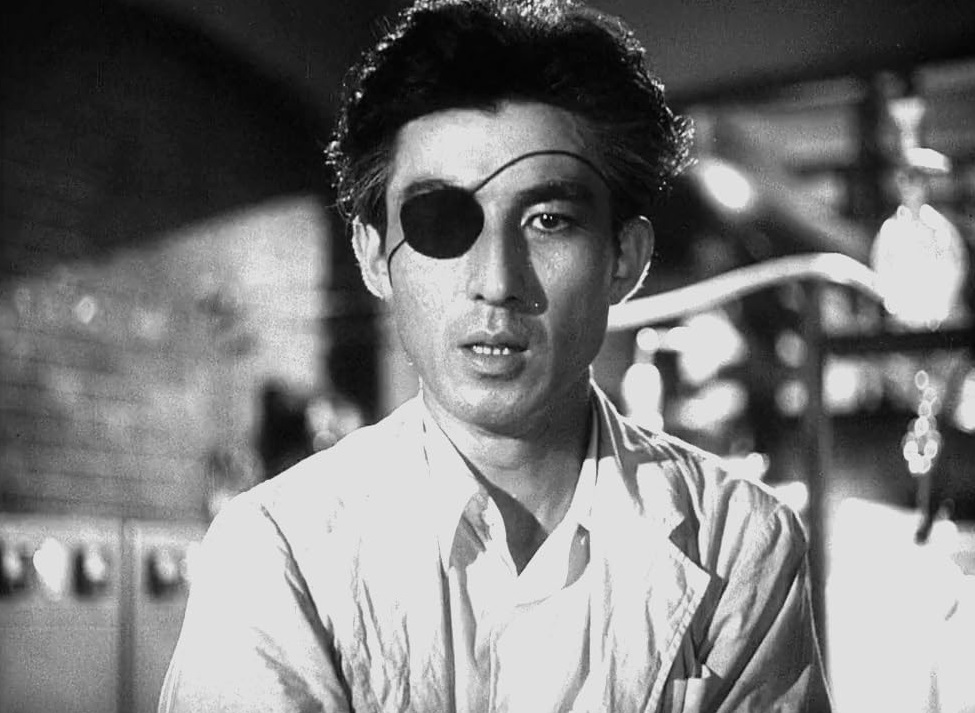
Dr. Serizawa maybe a recluse, but he is on purpose. He is a character who had suffered during World War II, and has seen the destructive capabilities of these new powerful weapons, and does not want to see another added to the list, and knows that if it is uesd once, it will be used again (which in fairness, it was 65 years later). This is the moment then, that this film morphs from a monster/kaiju movie, into a tragedy, as it is the only hope in defeating Godzilla. Godzilla was awoken by a weapon of terror, and went on a reign of terror, so the only thing that can stop him, is another weapon of terror. But Serizawa is initially dead set against using it, but succumbs to the pressure. But he knows, from this point going forward, there’s only one way to prevent his contraption, from ever being used again!

Dr. Serizawa therefore isn’t a monster. He is human, who deeply regrets what has led him to this moment, and his story ends in tragedy. Heroic, yes; but deeply tragic too. So if he isn’t the true monster, and neither is Godzilla, who is the true monster of this movie? Prepare for a shock!
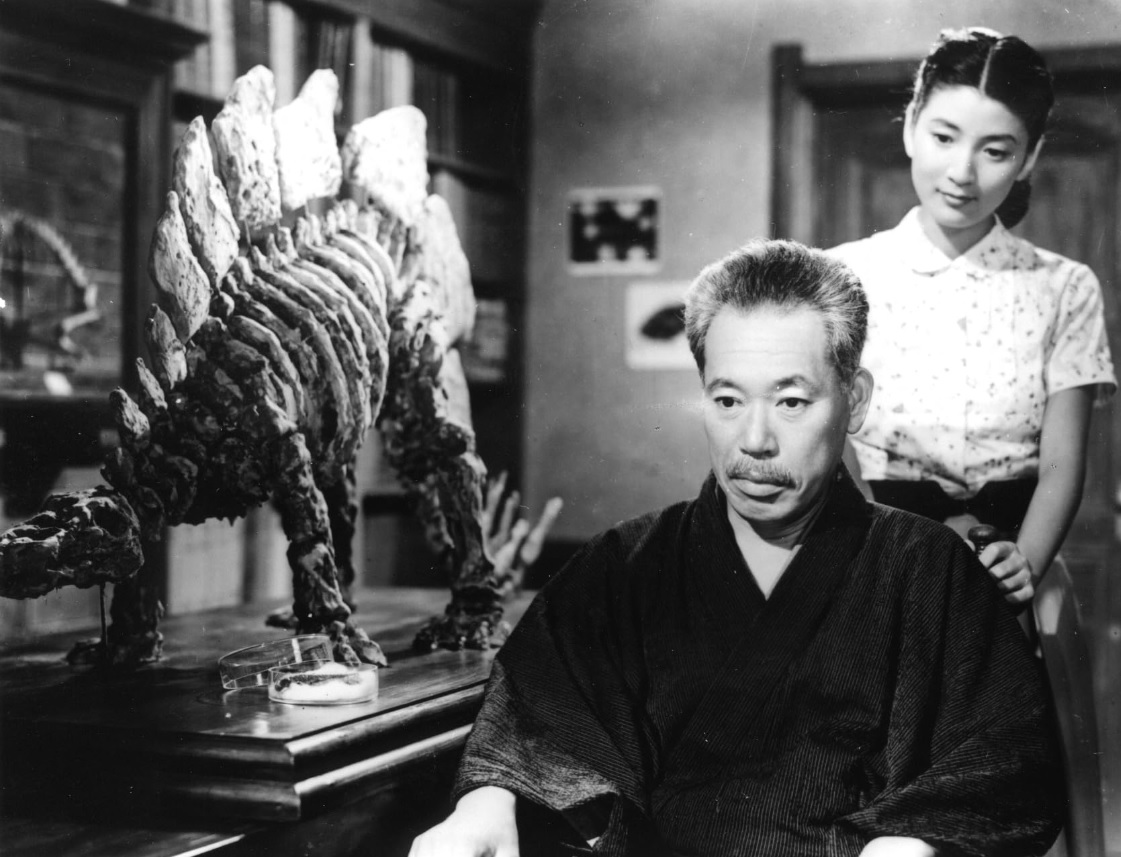
Dr. Yamane (Shimura) does not come across as a monster, but from a story perspective, he doesn’t learn, improve, or grow all that much. He comes across as the sympathetic scientist character, the one who explains how all these events have come to pass, a regular trope of monster movies from this period. He may be a nice man on the outside, but he’s actually rather selfish. Deep down, he believes that Godzilla should not be killed, as he is a vital scientific discovery, and whose existence should not be wasted. Fair enough, there’s still more to this world to discover. Even today, we are still discovering new species of animals, we’ve never seen or heard of before. But Godzilla is a problem, because he is a gaint creature, with incredibly destructive powers, and an agressive will. He is not going to stand around, and allow people to experiment on him. He’s a serious problem, that needs sorting out. So having this kind of scientific mind in this situation is not helpful, especially when innocent people are being killed.

Now this again does not necessarilly make him much of a monster, however his attitude does stink a bit; especially when others highlight the issues that Godzilla causes. Godzilla cannot be left to run amok; however Dr. Yamane’s approach, seems to value Godzilla’s existence over innocent civilians. Even when Ogata (Takarada) tells him as much, Yamane in that instant cannot hear that plea, and is thinking of his science. If you need further proof, consider his reaction at the end of the film. He initially mourns the passing of Dr. Serizawa, before then mourning the loss of Godzilla more, due to it’s potential as the scientific breakthrough of the century. He then goes on to highlight the increasing likelihood of another one appearing one day; doing so with an element of hope, that he may yet get another chance. Dr. Yamane does not look like, or come across as a monster, and there are moments in this film that highlight him as a caring person. But his science blinds him from the problem at hand, and he is far more concerned about his discoveries, than what his discoveries are truly capable of!
Godzilla 1954 is a truly Fantastic Movie. There is so much to unpack and discover, time and time again. And most of the time, we can only truly scratch the surface of this amazing film. There’s more to discuss, from how the plot is a very simple and easy to understand thread, to unpacking the emotional weight of the themes represented, to the pioneering special effects, the epic soundtrack, and those hidden subtleties that are now only being seen for the first time. It is a monster movie, but one that ends in a surprisingly tragic way; with the death of one character, hiding a dark secret, and knowing there’s only one way out. It’s a deeply sad ending, to a film that would launch an epic franchise, still going strong: 70 years later!
All Hail, The Supreme King of the Monsters!
 Things I Like
Leave a comment