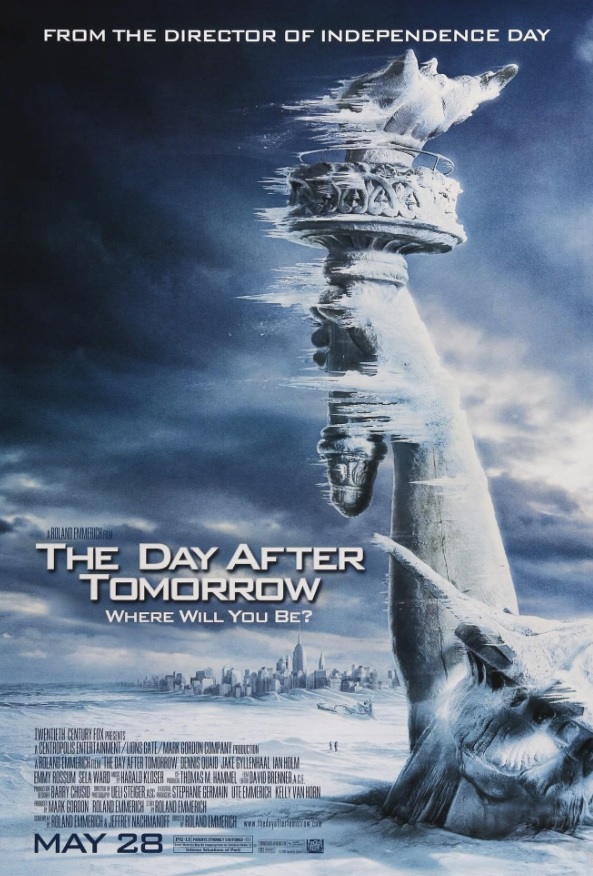
Strange weather conditions have been seen around the world. From the breaking away of a large ice shelf in the Antarctic Peninsula, to giant hail stones in Tokyo. But things get worse, very quickly, when Los Angeles is hit by not one, but four tornadoes. No-one is quite sure as to what is happening, except for one Paleoclimatologist, who thinks that this has all happened before, over 10,000 years ago!
Released in 2004, and directed by Roland Emmerich; The Day After Tomorrow is a science fiction disaster movie, inspired by Coast to Coast AM host Art Bell, and the book The Coming Global Superstorm by Whitley Strieber. The film stars Dennis Quaid, Jake Gyllenhaal, Ian Holm, and Emmy Rossum, with Sela Ward, Arjay Smith, Austin Nichols, Dash Mihok, Jay O. Sanders, Kenneth Welsh, Nestor Serrano, and Adrian Lester in supporting roles. The film was one of the first (if not the first) large scale Hollywood movies to be produced, which tackled the idea and effects of climate change. Emmerich himself has even addressed the lack of movies discussing environmental issues, stating that there needs to be more of them to “wake people up“.

In many respects, this film was probably released a bit too early in the climate change discussion. If it was released today, it could have been a much bigger thing, but because it was released when the discussion had only really started to begin, well, let’s be fair, no-one really cared back then. I went to the cinema to see this film when it was released back in 2004 with my Mam, and I largely wanted to see it because it looked super exciting, with it’s extreme weather action, like a scene from Deep Impact or Twister, but also directed by the man who made Independence Day. Nowadays though, it’s hard not to hear someone discussing the environment, as it feels like one of the hottest news topics that has now encapsulated the whole world. Which makes it rather surprising then, that since then, this film has not had a major HD big screen re-release.
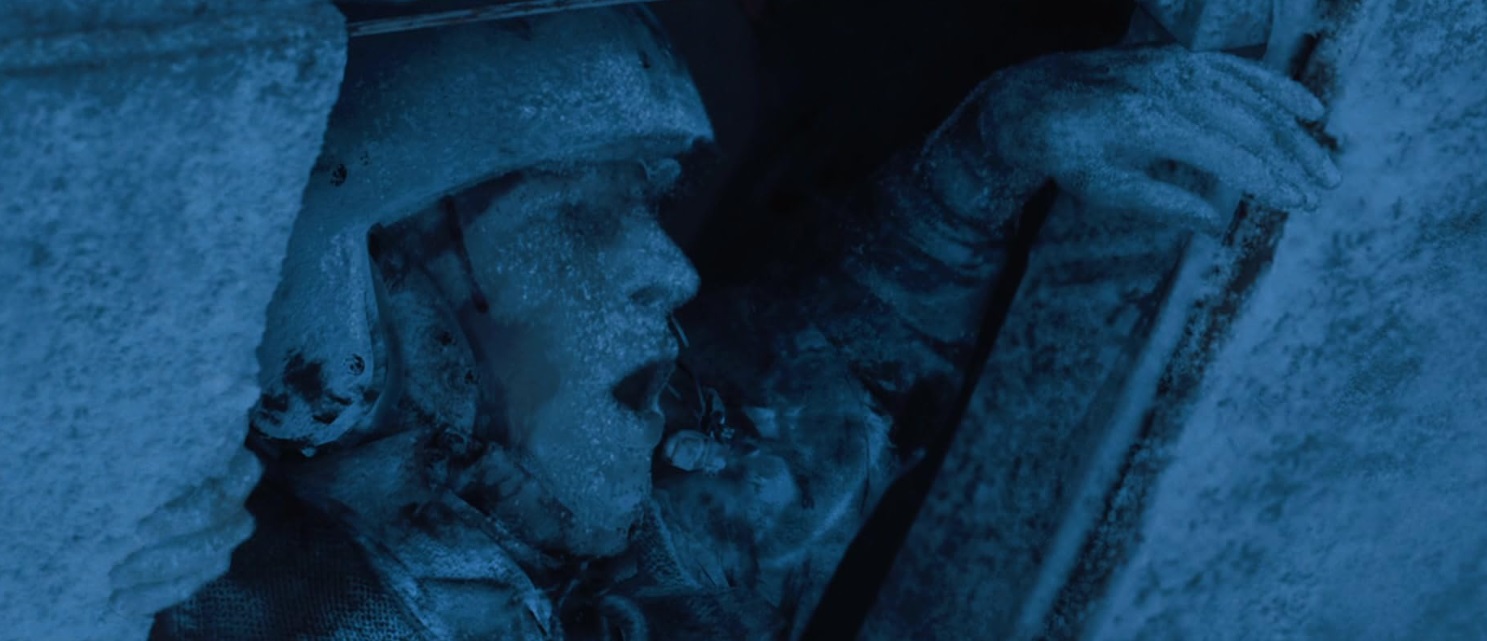
It is genuinley surprising, given that with the continuing discussion of the environment, and climate change; that this film, with it’s big budget, Hollywood magic, has not been re-released (not even for it’s 20th anniversary last year), nor has a sequel been made (but possibly), or even a spiritual sequel, or even some kind of TV series. This has the potential to become a lucrative property, originally released by a company which is now owned by The Walt Disney Company; who now releases nothing but ‘cash cow‘ movies (Star Wars, Marvel, Live Action variants of Animated classics, etc.). It does boggle the mind when you think about it. But anyway, the film.
The Day After Tomorrow is an interesting film, which tries to make an important point about the environment, but with Jurassic Park like scare tactics. It scares the audience into the unseen future, with apocalyptic like visions. It’s sort of like the tag-line to the BBC film Supervolcano: “This is a true story, it just hasn’t happened yet”, which is actually far better than the tag-line for The Day After Tomorrow, which is: “Where Will You Be?”
In this sense then, it pretty much sells itself. I can still remember TV shows at the time of the film’s release showing footage of the Tornado attack in Los Angeles. This was still a time though when large scale CGI was only just starting to really break out, after the high’s and low’s on the 1990’s. But when you sit down to actually watch the film, it is more paced out, at least early on, with a simillar pace to Independence Day.

You can’t just jump in to the big bang, you need to set up, and build it up, whilst also introducing characters. Independence Day shows imagery of the aliens arriving and preparing their ships before a single one starts to enter the atmosphere, or even darken the skies.
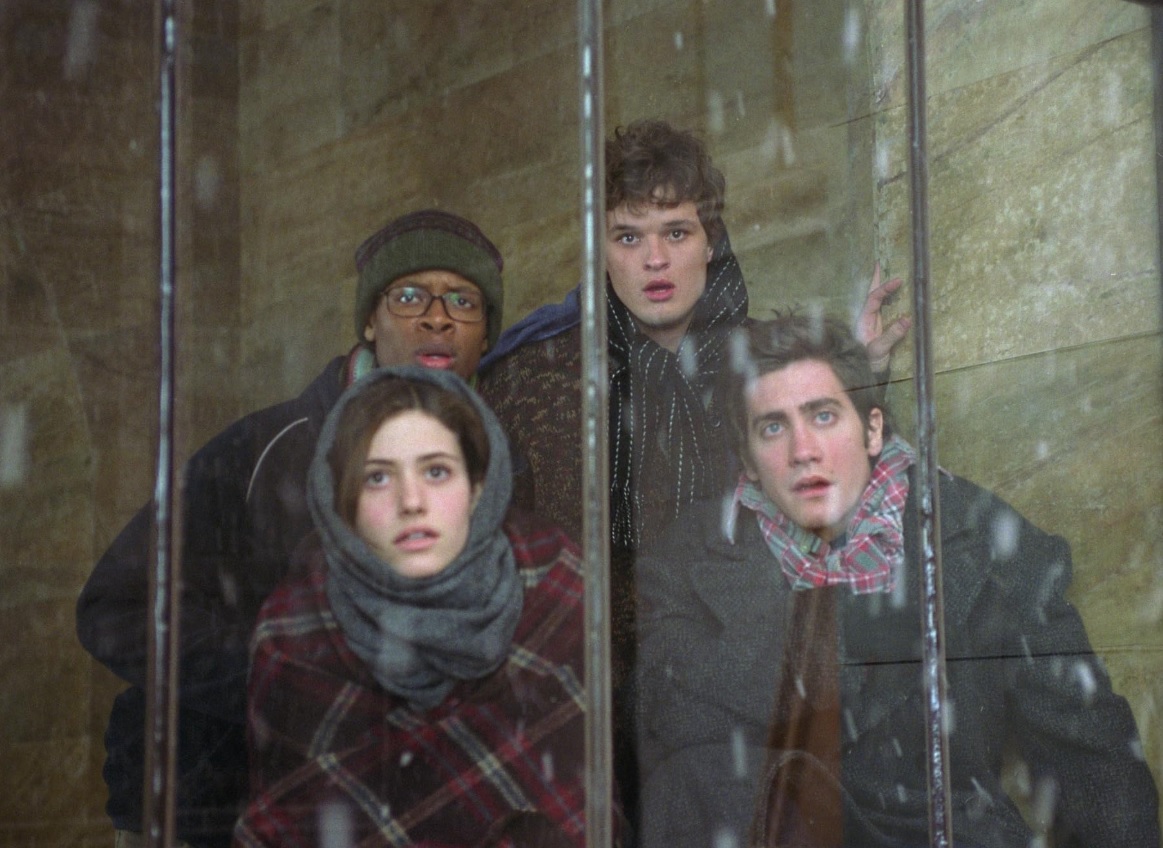
We see the ice shelf break off, then the giant hailstones, and seemingly never ending flocks of birds flying away from Manhattan. Then the Tornadoes happen, and then it again casually builds up to the giant wave that engulfes New York City (did Emmerich despise New York back then, three films in less than 10 years where the city either gets destroyed or attacked?). But then the leisurely pace, gets very relaxed. As the weather brings on the snow, it becomes more of a survival story, as several people get stuck in the snow in New York, whilst a father (Quaid) tries to get to New York to save his son (Gyllenhaal), whilst also depicting what’s happening around the world.
This new approach from the half-way point is quite cosy, and occassionally sweet (although the film could cut out quite a bit of rubbish involving side characters who are just taking running time and don’t concern the two main stories), but it makes you wonder if it went too big too fast?
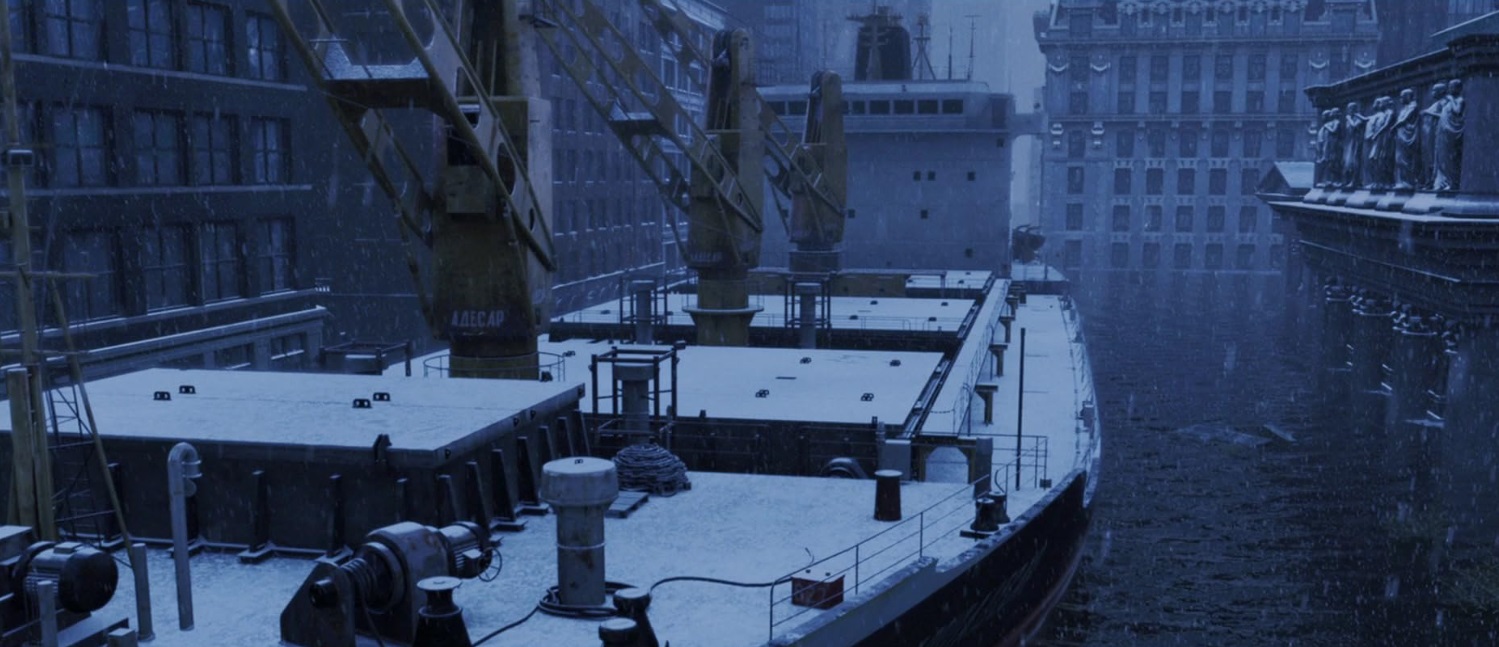
Disaster movies are about large scale disasters, and rely on imagery to portray this. They can be small and localized (The Towering Inferno and The Poseidon Adventure), or huge international affairs (Deep Impact and 2012). In the case of The Day After Tomorrow, it’s a large scale international affair, which tries it’s best to cover all applicable areas of the world, showcasing frightening weather conditions, and peoples reactions to it. But the huge wave comes in at the half-way point, where the film then focusses purely on the new ice age. From this point on then it becomes this more desperate but cozy affair, with very little disastrous imagery to come, rather than an added level of peril, from a sudden harder hitting freeze near the end. And if you (like me) went to see this because you wanted to see the many tornadoes in Los Angeles, it can feel like a let down that the only two major moments that happen after the big wave, are the sudden appearance of an oil tanker, and a slow moving chill!
But fair enough, it could be hard to do any other adverse weather conditions in an area covered in snow. I mean, you can’t just suddenly cause a volcano to appear/erupt in New York (sort of like in the film Volcano), especially if it’s too cold for one to even think of appearing. Or to turn the attention away from the cold snap to the island of La Palma to watch the potentially ‘forseen’ Tsunami to suddenly happen (or turn to the world of Hollywood, and find out why that has not been turned into a disaster movie yet?).
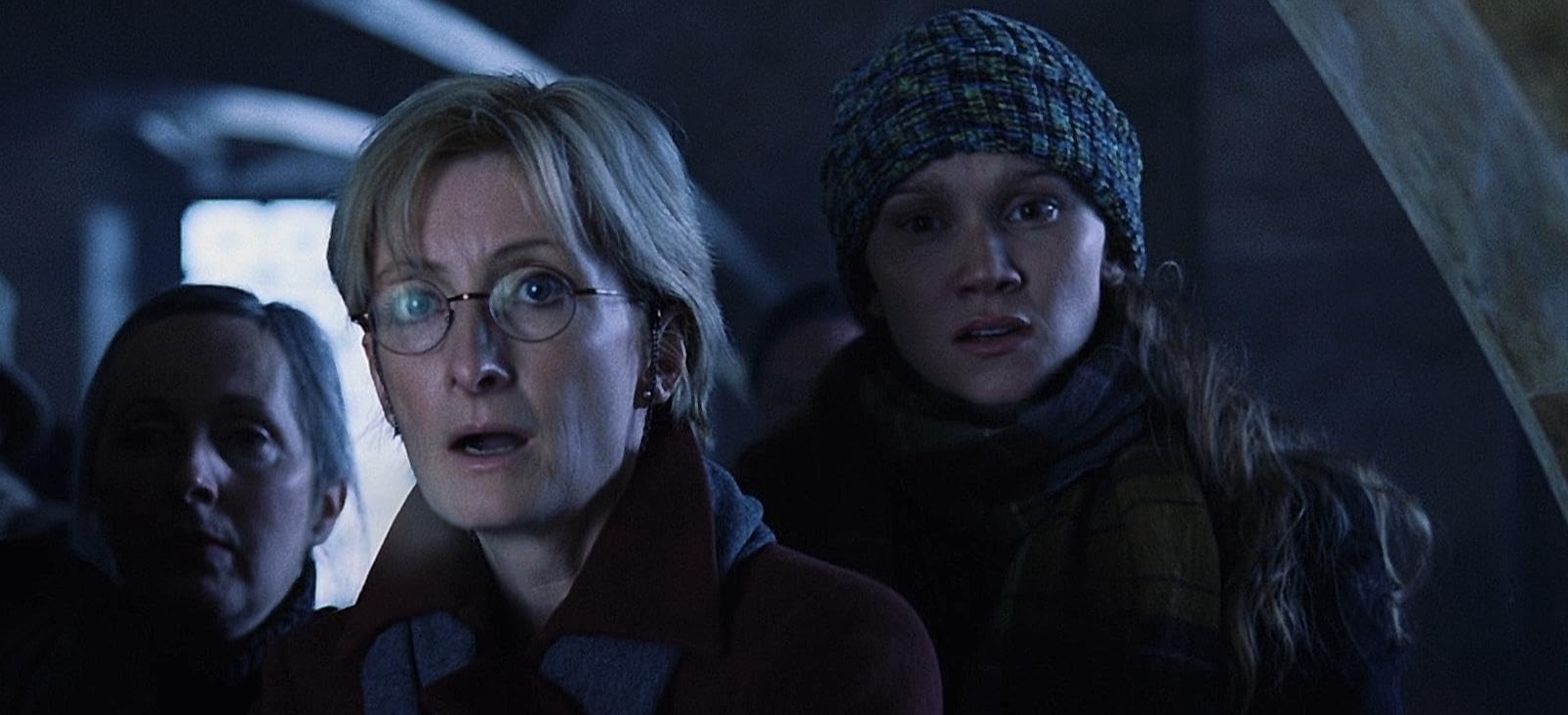
But from the half-way point, the human drama continues, showcasing a father trying to reconnect with his son, both physically and emotionally, to a blossoming new romance between said son, and his wannabe girlfriend (Rossum). And whilst that’s going on there’s mini stories of desperate survival attempts from those who try to survive the ice age by going outside, to those who have run out of luck, and time. So it is a sudden flip of the coin in approach, as the oblivious citizens now must come to terms with the situation, that they can’t just fight their way out of, like say in Independence Day.
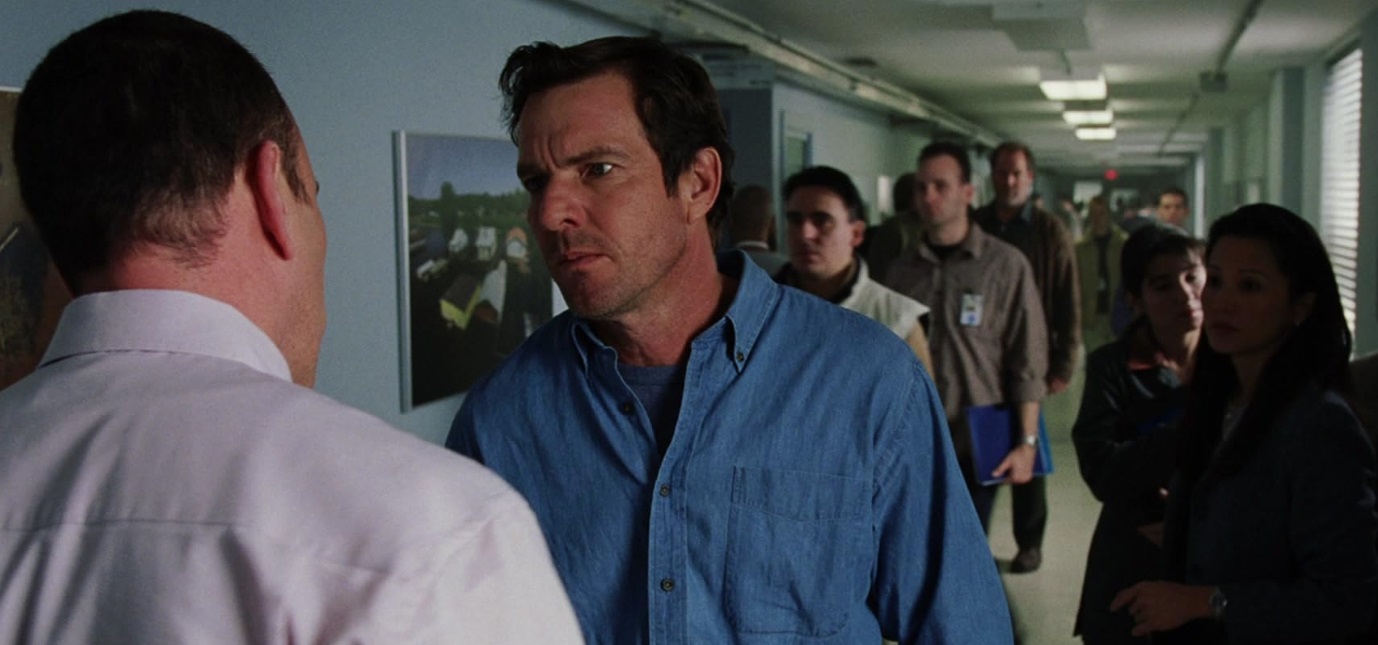
But given that it’s nature’s will and desire to cause this agony, it’s a bit odd then that the film features an almost military-sounding theme (composed by (Harald Kloser). Not as much to begin with of course, as it tries to sound sorrowful and sad, or maybe poigniant. But every now and then, it features this almost military march-like drum sound. It happens frequently ocassionally, but it can throw off your perception, as to what this film is going to be like, as if this is something the U.S. Military can solve.
The Day After Tomorrow, tried to highlight a hot topic of conversation, but in a way that had a stronger chance of getting people interested, through shock tactic like visuals (without turning into a horror film). It told a story that was easy to follow, that complemented, and gave reason towards it’s terrifying imagery; whilst also taking it’s time, rather than go for the full thing in just one hour. It highlighted the possibilities, but also mentioned ways to prevent it. It could be argued however, that it was released a bit too early in the conversation, to be the groundbreaking moment to change the worlds mind on the topic, with the topic of climate change being more a thing talked about in more detail over the last 10(ish) years. So it does make you wonder, what could have happened, if they had just waited 20 years?
 Things I Like
Leave a comment